DealerDeck
Voice-led floor intelligence for dealership sales teams — born from working the BMW lot, and rebuilt around the one question nobody has to approve.
- Role
- Founder & Technical Lead
- Status
- Beta pilot
- Stack
- React Native · Expo · Supabase · Gemini
- Origin
- BMW North Scottsdale
Reps sell on the floor. Everything else lives at the desk.
I was a sales valet at BMW North Scottsdale — on the floor daily, on a first-name basis with ten-plus reps, watching the same problem from inside it. The idea wasn't picked for being novel. It was picked because I was already the customer.
Reps spend their best hours walking the lot. Every system they depend on — inventory, history, notes — waits until they sit down. The information exists; it just isn't reachable in the two minutes that matter.
The binding constraint was permission, not code.
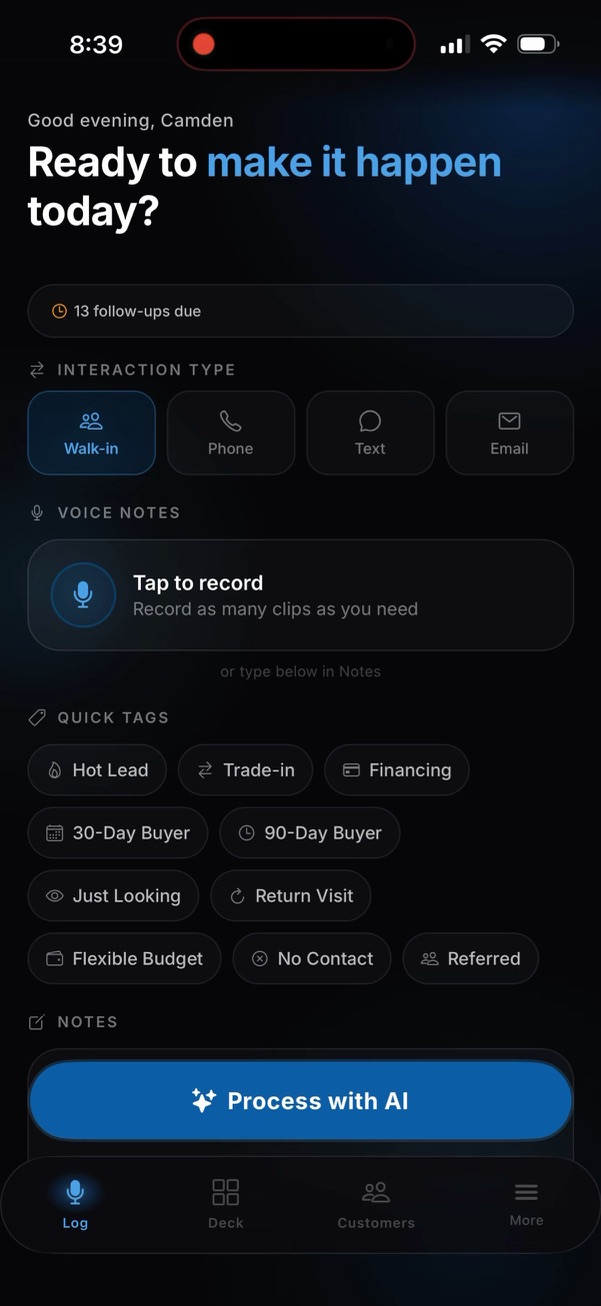
V1 was a voice-logging lead capture tool — speak a note after an interaction, get back a structured lead card. It worked, and reps liked it. It also required permission: it touched customer data, implied CRM integration, and gave every stakeholder a reason to say "let me check on that."
Inventory intelligence required none of that. Same voice interface, same AI layer, aimed at a question nobody has to approve. The product went from permission-gated to permissionless, and everything that shipped afterward shipped because of it.
Ask the lot a question. Get an answer before the customer finishes theirs.
A rep asks for a car the way they'd ask a colleague. The system resolves it against a live inventory sync off the dealership's own search backend and answers in seconds, with the rep never appearing to consult a device mid-conversation.
Facts come from the record, not the model. Specs and figures resolve statically; the model handles language and intent only. That was born from a real risk — a hallucinated spec number reaching a customer — and it doubles as the latency and cost strategy.
Everything that broke, broke only in production.
The pilot went to five TestFlight users and the app started failing in ways that never appeared in development. Four bugs in that stretch produced most of the engineering principles the project still runs on.
The pattern behind all of them: development is a forgiving environment and production is not. Testing on a real TestFlight build before release stopped being a nicety.
A pilot, a GM meeting, and a price a rep pays themselves.
The GM meeting was won by minimizing the ask: a standalone tool touching no dealership systems, costing them nothing, already in five reps' hands. The request was narrow — let the guys who have it keep using it. The outcome was a continued pilot and an invitation into the CRM transition conversation. Partner, not vendor.
The business model followed the same logic as the product. The individual rep is the paying customer at roughly twenty dollars a month — the same mental bucket as their Spotify subscription, low enough to never need a manager's approval. Dealership management gatekeeps integration; it doesn't buy.